

| Quick answer
DIN 931 is a hex bolt with a partial thread. DIN 933 is the same bolt with thread running the full length. DIN 934 is not a bolt at all: it is the hex nut that pairs with both. If your joint carries shear loads, the plain shank of DIN 931 is usually the right call. If you are threading into a tapped hole or need flexibility in grip length, use DIN 933. |
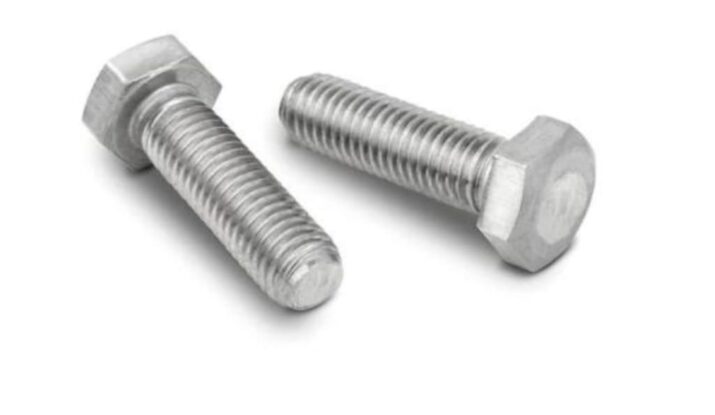
Ask for a “hex bolt” from any fastener counter in Dubai and you will get a question back: 931 or 933? In a catalogue photo the two look identical. The difference sits in the threading, and it matters more than most buyers expect. Order the wrong one and you either weaken a shear joint or find a bolt that will not clamp down on a short stack of plates.
This guide covers what each standard actually specifies, where the ISO equivalents differ, and how to pick between them without calling your engineer twice.
What the DIN numbers mean
DIN standards come from the German standards institute and they define dimensions and tolerances: head size, thread pitch, lengths, that sort of thing. They say nothing about strength. Strength comes from the property class stamped on the head, such as 8.8 or 10.9. So a “DIN 933 M20 x 60, class 8.8, HDG” tells you the geometry, the grade and the coating in one line. That is a complete order. “M20 bolt” is not.
DIN 931: the partially threaded workhorse
On a DIN 931 bolt the thread covers only part of the length. The rest is plain, unthreaded shank. That plain section is the point. When two plates are bolted together and the load tries to slide them across each other, the bolt gets loaded in shear. With a DIN 931 bolt sized correctly, the shear plane passes through solid steel rather than through a thread root.
That is why structural drawings, flange connections and machinery joints usually call for 931. The cross-section through a thread is smaller than the shank; on an M20 the stressed area drops from 314 mm2 in the shank to 245 mm2 in the thread. Roughly a fifth of the steel disappears exactly where you need it.
DIN 933: fully threaded, fully flexible
DIN 933 threads run right up to the head. That makes it the bolt for tapped holes, short clamp lengths and situations where you cannot predict the grip in advance. Maintenance teams like it because one box covers many jobs. The trade-off is the one above: if a 933 ends up loaded in shear across its threads, capacity drops. For pure tension joints the difference between 931 and 933 barely matters.
DIN 934: the nut that pairs with both
DIN 934 is the standard metric hex nut. Same thread as the bolts, so it runs on either. Two things to get right when ordering. First, match the property class: class 8 nuts with 8.8 bolts, class 10 nuts with 10.9. A soft nut on a hard bolt strips before the bolt reaches its rated preload. Second, hot dip galvanized assemblies need nuts tapped oversize after coating, otherwise the zinc layer jams the thread. Any decent supplier handles this automatically, but say “HDG assembly” rather than ordering bolts and nuts as separate line items.
Side by side
| Standard | What it is | Threading | Best for | ISO equivalent |
| DIN 931 | Hex head bolt | Partial | Shear joints, structural steel, flanges | ISO 4014 |
| DIN 933 | Hex head screw | Full length | Tapped holes, short or variable grip | ISO 4017 |
| DIN 934 | Hex nut | Internal | Pairing with both bolts above | ISO 4032 |
DIN or ISO: does it matter when ordering?
For most joints, no. ISO 4014, 4017 and 4032 replaced the old DIN numbers and the parts are interchangeable in function. The catch is the width across flats. A few sizes changed in the switch, including M10, M12, M14 and M22; an M12 DIN bolt takes a 19 mm socket while the ISO version takes 18 mm. If a site crew has torque tooling set up for one series and a mixed delivery arrives, that costs an afternoon. Specify one series per project and hold your supplier to it.
How to choose in practice
- Joint loaded in shear, or the drawing shows plates sliding relative to each other: DIN 931, with enough plain shank that the shear plane misses the thread.
- Threading into a tapped hole, or clamp length is short or varies: DIN 933.
- Buying nuts: DIN 934, class matched to the bolt, oversize tapped if the assembly is galvanized.
- Outdoor or coastal installation in the Gulf: specify the coating with the same care as the size. We cover coating choices in a separate guide on fastener coatings for oil and gas.
FAQ
Q: Can I use DIN 933 where the drawing says DIN 931?
Not without approval from the project engineer. The drawing usually specifies 931 so the plain shank sits in the shear plane. A fully threaded substitute puts threads there instead and reduces joint capacity.
Q: What property classes do these come in?
4.6, 8.8 and 10.9 cover almost everything, with 8.8 doing most structural work in the Gulf. Nuts pair by class: 8 with 8.8, 10 with 10.9.
Q: Is DIN 931 the same as ISO 4014?
Functionally yes. Watch the width across flats on M10, M12, M14 and M22 if your tooling is already set.
Q: Do DIN 934 nuts fit both bolt types?
Yes, the thread is identical. Match the class and order oversize tapping for galvanized assemblies.
Q: Which sizes are stocked in the UAE?
M6 to M36 in class 8.8, zinc plated and hot dip galvanized, covers nearly all demand. Larger diameters and 10.9 typically come against order with mill certificates.